Wild turkey
Silent SpringWild turkeys are among the clearest documented casualties of the United States Department of Agriculture’s fire-ant poisoning program. Their disappearance from a treated Alabama area, alongside the failure of domestic turkeys to reproduce, turns the program’s broad claims of agricultural protection into a concrete record of wildlife loss and reproductive harm.
A species adapted to its land
The book places wild turkeys within a larger account of landscapes shaped over long periods by the fit between animals and their habitats. On the high western plains and lower mountain slopes, animal life evolved in response to demanding local conditions; the swift pronghorn antelope and the sage grouse are described as especially well adjusted to that land. This account establishes a recurring contrast: ecosystems are not empty ground awaiting improvement, but relationships formed through time.
The same tension informs the book’s discussion of land-management campaigns. Agencies seeking more grazing land treated sagebrush as an obstacle to grass production, although sage and other native plants sustained a natural system. In a separate example of indiscriminate spraying, the United States Forest Service’s treatment of 10,000 acres in Bridger National Forest also killed willows, damaging habitat on which beavers depended. These cases frame the turkey losses not as an isolated accident but as part of a wider conflict between simplified management goals and ecological interdependence.
The fire-ant campaign
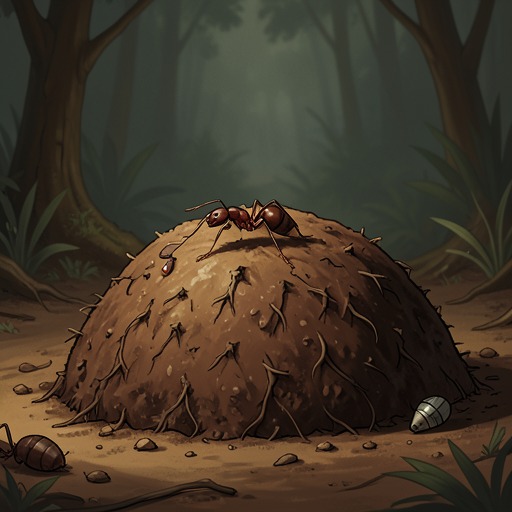
In 1957 the United States Department of Agriculture changed its stance toward the fire ant and launched a major publicity campaign. Government releases and motion pictures presented the insect as a threat to southern agriculture and wildlife, helping secure congressional support for a control project. The book reports that the claims used to justify the program were later discredited, even as the campaign moved forward.
The program began in 1958 despite objections that research should come first. A million acres were treated in its first year, leaving subsequent investigation to document consequences after the fact. Studies by biologists from state and federal wildlife agencies and several universities recorded losses ranging up to the complete destruction of wildlife in some treated areas; poultry, livestock, and pets were killed as well. The Department of Agriculture, the book says, brushed aside evidence of damage.
The Alabama flock
In Wilcox County, Alabama, observers had counted 80 wild turkeys on an area before heptachlor was applied. By the summer after treatment, none could be found—not a surviving flock, but only a clutch of unhatched eggs and one dead poult. The change is described through what remained: failed reproduction and a single dead young bird where a known population had been.
The losses were not confined to wild birds. On farms in the treated area, domestic turkeys produced few young: few eggs hatched and almost no young survived. This pattern did not occur in nearby untreated areas, a contrast that connected the reproductive failure to the chemical treatment rather than presenting it as a general decline across the region. The book notes that the wild turkeys may have suffered the same fate as their domestic counterparts.
Residues and wider consequences
The surrounding evidence traces how fire-ant poisons could move beyond the initial target. Woodcocks wintering in Louisiana and breeding farther north carried the taint of the chemicals in their bodies; they feed heavily on earthworms, and surviving worms in Louisiana were part of the exposure pathway. In another residue finding reported in the same account, 90 percent of sampled material contained dieldrin or a form of heptachlor, at concentrations reaching 38 parts per million. These details place the turkey decline within a larger problem of persistent contamination and food-chain transfer.
The episode also exposes a gap between public justification and ecological outcome. The fire ant was promoted as an urgent danger to crops and wildlife, while the treatment itself was followed by wildlife destruction, poisoned domestic animals, and reproductive failure. The wild turkeys’ disappearance gives that reversal its most concentrated form: an intervention presented as protection left no birds in the counted area, only evidence of a generation that did not hatch.